5 Signs a Tree Is Dangerous and Needs Removing
Most trees that worry people are fine, and some trees that kill people looked fine the week before. That's the uncomfortable truth about tree hazards: size and ugliness aren't the danger signs, structure and health are. After 15+ years assessing trees across the Colac district, these are the five signs that make us look closer, and sometimes recommend a tree comes down before it comes down on its own.
1. A lean that's new, or getting worse
Plenty of trees lean and have leaned safely for decades, they grew that way toward the light. The dangerous lean is the one that's changed. If a tree is leaning further than it used to, or the soil on the opposite side of the lean is lifting, cracking or mounding, the root plate may be failing. That's the closest thing tree work has to an emergency. Keep people and cars out from under it and call an arborist the same day, especially after storms or long wet spells when Colac's heavier soils are saturated.
2. Dead limbs and a thinning crown
Dead branches, no leaves in summer, bark falling away, brittle grey wood, are how a tree tells you part of it has already died. One small dead limb is housekeeping. Large dead limbs over a house, driveway or play area are a hazard right now, because deadwood drops without warning and gums in particular are notorious for it. Dieback starting at the top of the canopy and working down is the bigger red flag: it usually means a root or vascular problem, and the whole tree, not just a limb, is declining.
3. Fungus and rot around the base
Mushrooms, bracket fungi or conks growing from the trunk base, the root flare or the soil right at the roots are fruiting bodies of fungi that may be consuming the wood inside. A tree can look completely healthy above while rot hollows out its structural base, and by the time fungus is fruiting, decay is usually well advanced. Not every fungus is a death sentence, some species matter far more than others, which is exactly why this sign warrants a professional look rather than a wait-and-see.
4. Cracks, cavities and weak unions
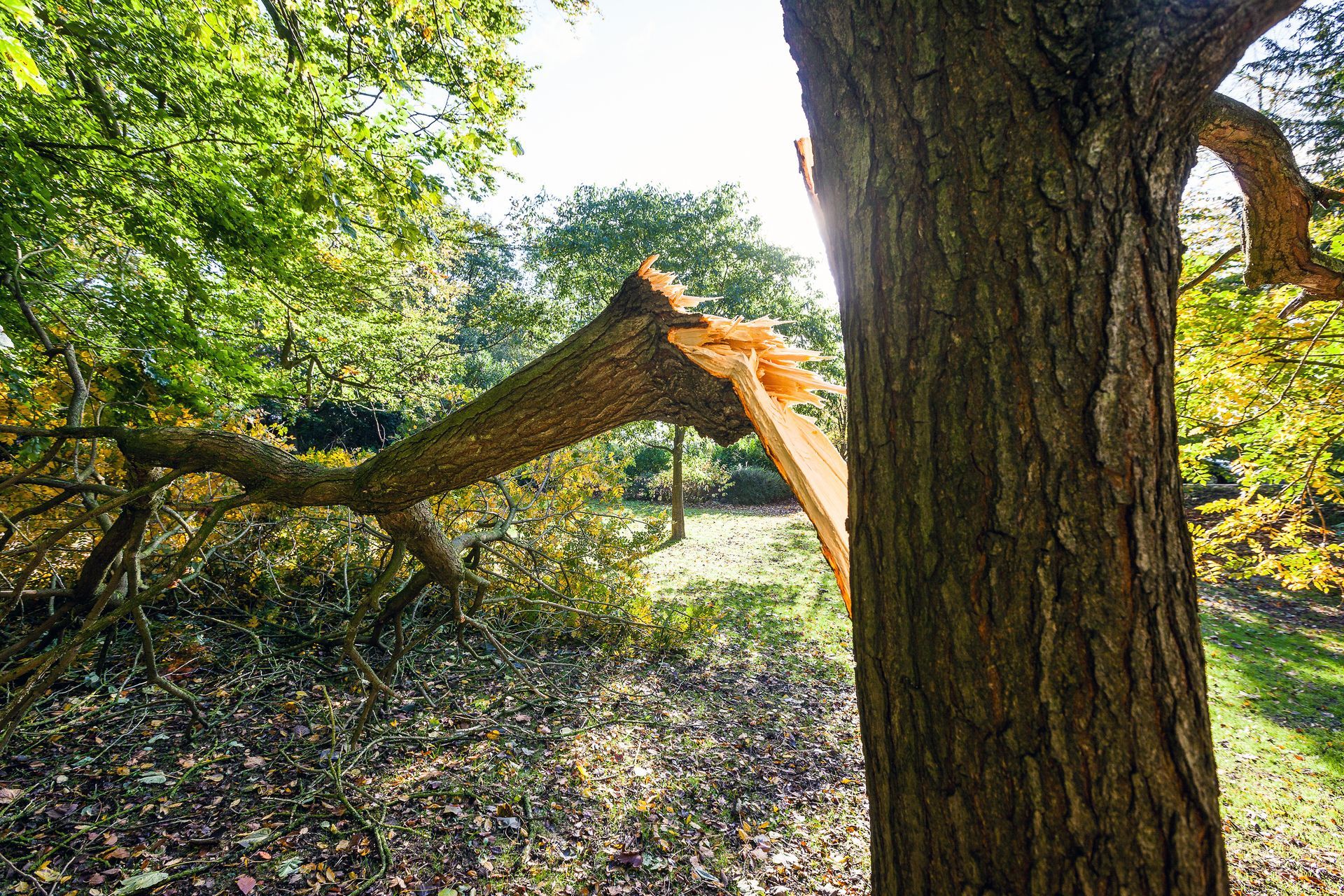
Structural defects fail on otherwise healthy trees. Watch for vertical cracks in the trunk, deep cavities or hollows (a hollow isn't automatically dangerous, but a big hollow in a loaded trunk is), and tight V-shaped forks where two stems press against each other with bark trapped between, what arborists call included bark. Those unions are dramatically weaker than they look and are a classic failure point in storms. The encouraging part: a tree with a weak union can often be cabled and braced rather than removed, preserving the tree while managing the risk.
5. Root damage you can trace to recent works
Roots do the anchoring, and most of them live in the top half-metre of soil, well within reach of trenching, driveway works, new sheds and soil level changes. If a tree starts declining, dropping limbs or leaning within a couple of years of excavation nearby, suspect the roots. Severed anchor roots don't grow back the way branches do, and a big tree with a compromised root system on one side is a lever waiting for a windy day.
So, does the tree need to come down?
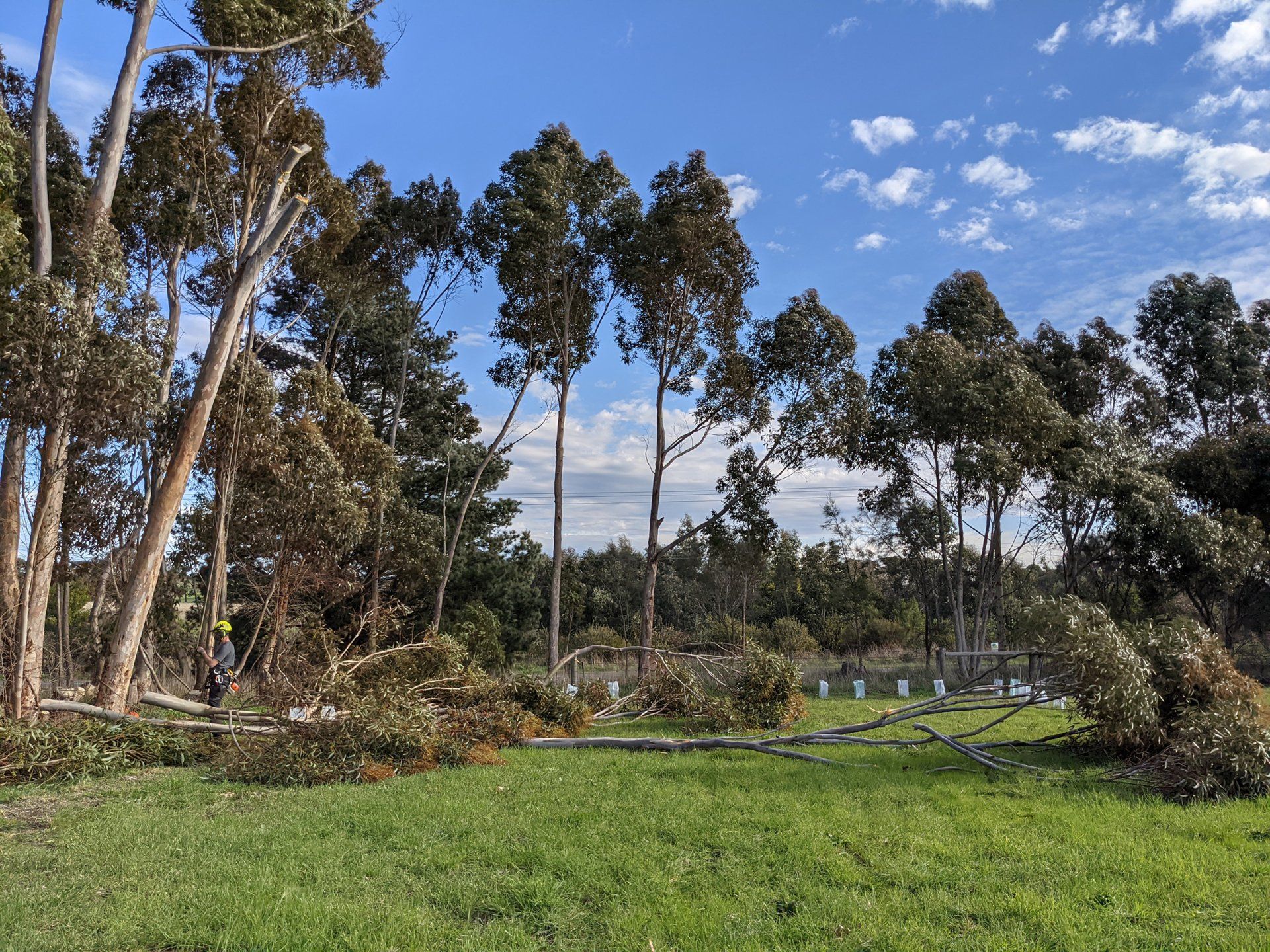
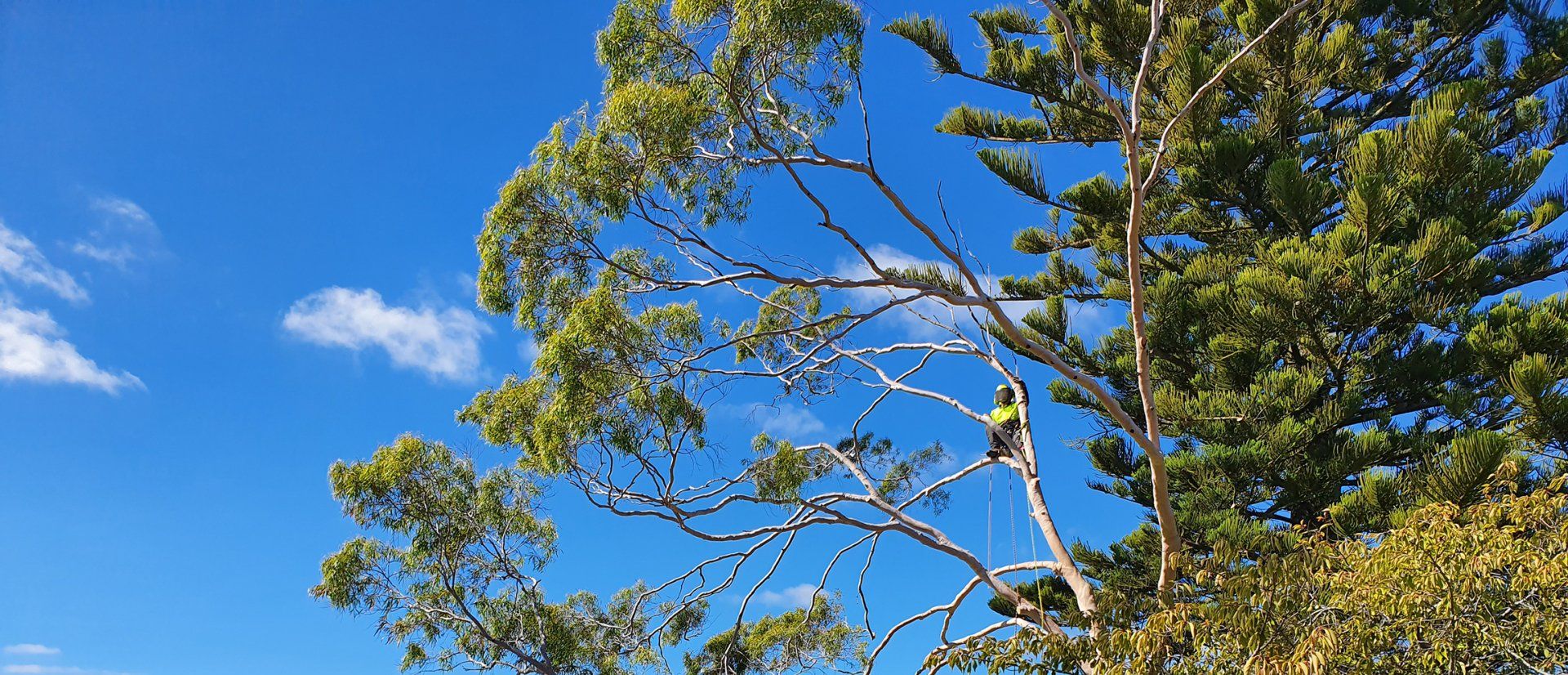
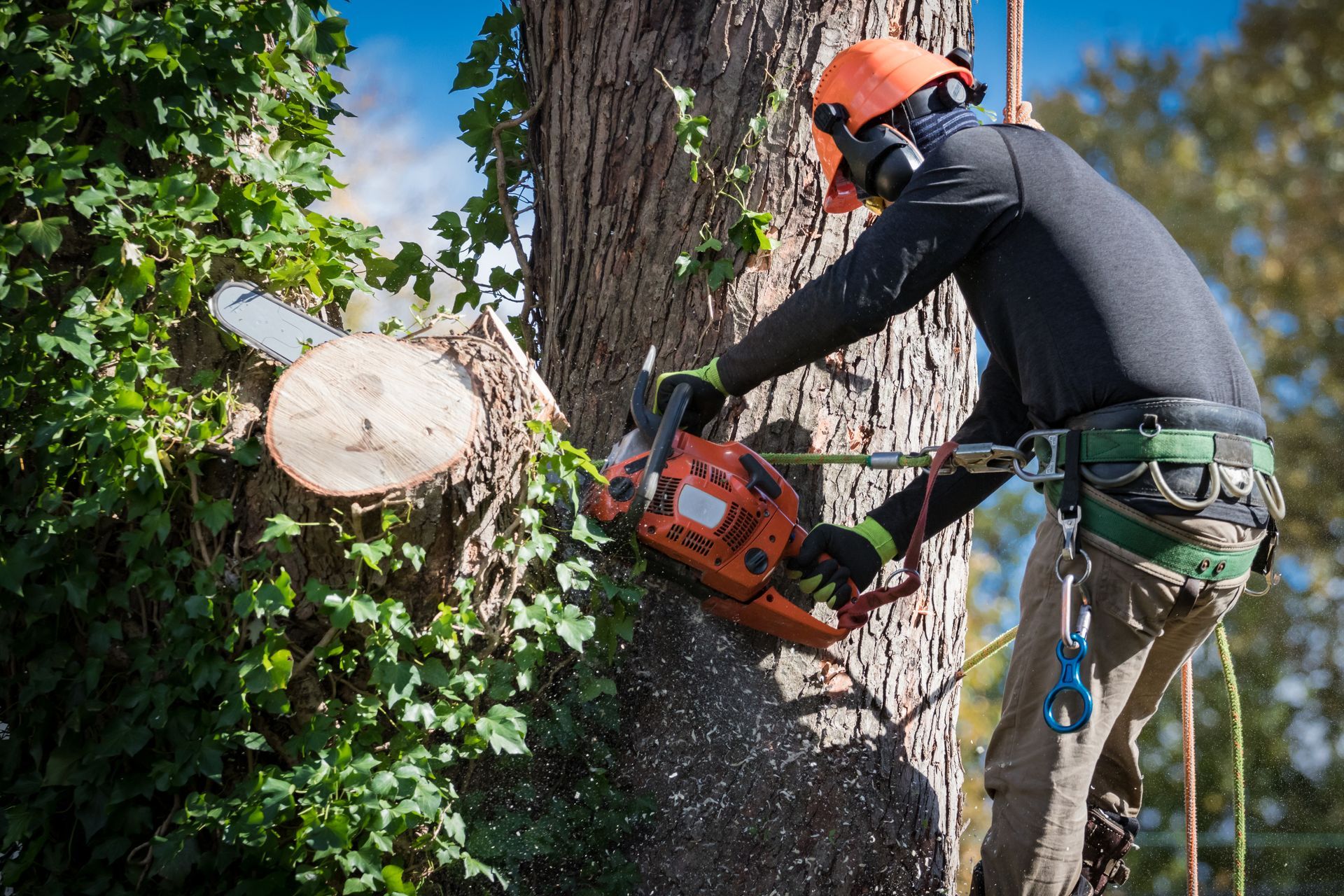
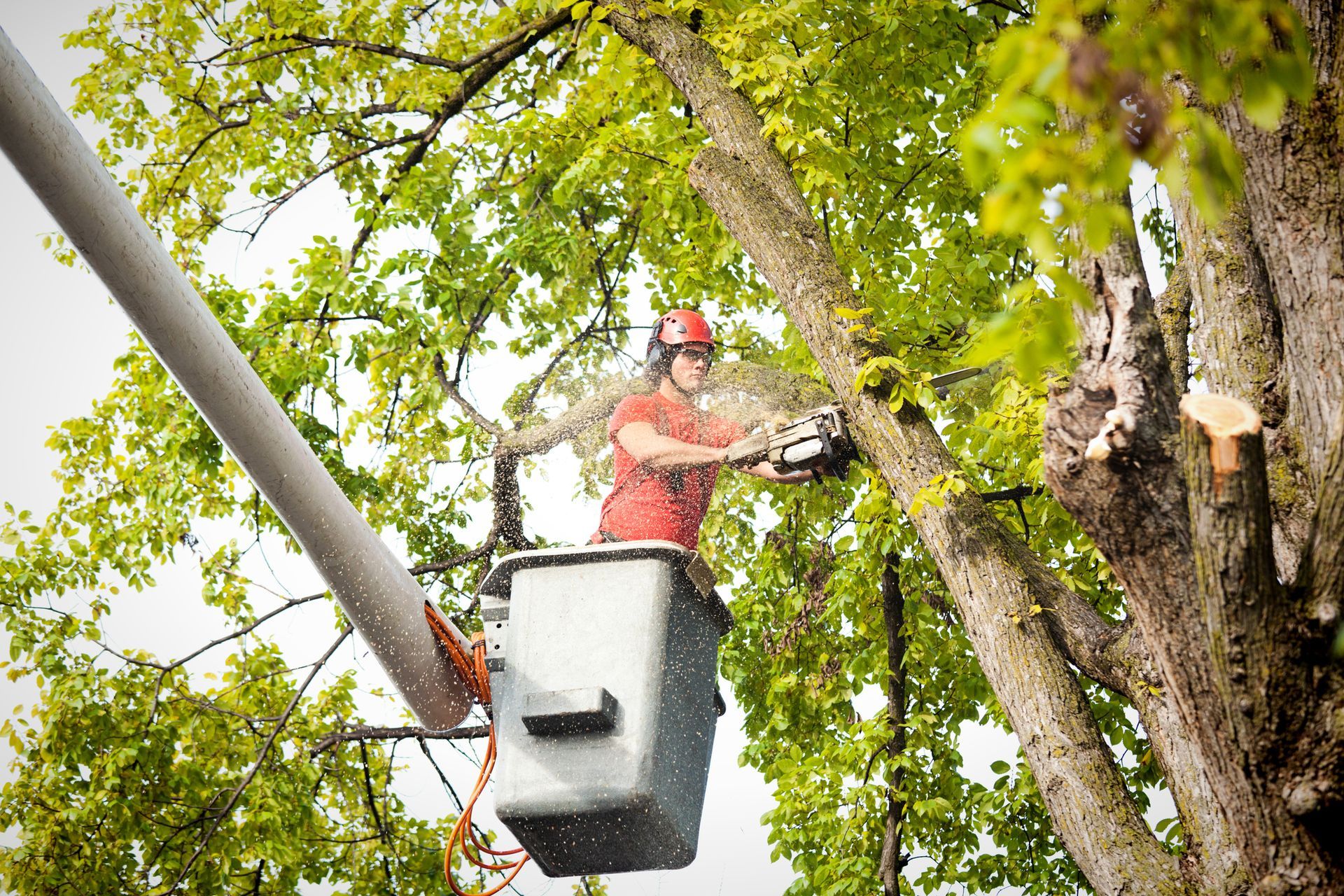
Not always, and this is where honest assessment earns its keep. Of the trees we're called to look at, a good share need pruning, deadwooding, bracing or simply monitoring rather than removal. Removal is the right call when the structural problem can't be managed: a failing root plate, advanced basal rot, or a declining tree over a target it could hit. If it does need to come down, that's a job for a qualified crew with the right rigging, dangerous trees are dangerous to work on for exactly the reasons they're dangerous to leave. And check your council's rules first: many Victorian councils require a permit to remove significant trees, which we can advise on when we quote.
Frequently Asked Questions
Who is responsible if my tree falls on my neighbour's property?
Generally, liability turns on whether the risk was foreseeable and whether you took reasonable steps. A tree that failed in an extreme storm with no warning signs is treated differently from one that dropped a limb everyone could see was dead. Getting a documented arborist assessment of a suspect tree is both the safe move and the sensible paper trail.
Can I remove a dangerous tree myself?
For anything bigger than a small garden tree, we'd strongly advise against it. Dangerous trees fail unpredictably under saw, chainsaw injuries are common in exactly this scenario, and a badly dropped trunk can cause the damage you were trying to prevent. Council permit rules can also apply even to hazardous trees, though genuine emergencies are treated differently.
How quickly can a dangerous tree be removed?
Genuine hazards jump our queue. A tree actively failing over a house, driveway or fence line gets prioritised, often same-day or next-day depending on conditions and access. For non-urgent removals, we'll quote first and book you in; either way, call 0488 553 650 and describe what you're seeing.
Is a hollow tree always unsafe?
No. Trees are engineered like tubes, and a tree can stand safely for decades with a surprising amount of hollow, which is also valuable wildlife habitat. What matters is how much sound wood remains relative to the load the tree carries. That's a measurement and judgement call, which is why hollows warrant an assessment rather than automatic removal.
What does a tree hazard assessment involve?
We look at the whole picture: the canopy for deadwood and dieback, the trunk for cracks, cavities and fungal fruiting, the unions for included bark, the base and root zone for lifting or damage, and what's underneath the tree if something lets go. You get a straight recommendation: leave it, prune it, brace it or remove it, with a quote for whichever applies.
Worried about a tree on your place? Send Colac Trees a few photos or call 0488 553 650 for an honest, obligation-free assessment.